I install fully automated AI development factories — systems where AI agents do the engineering work, not just assist with it. Your team directs. The factory delivers.
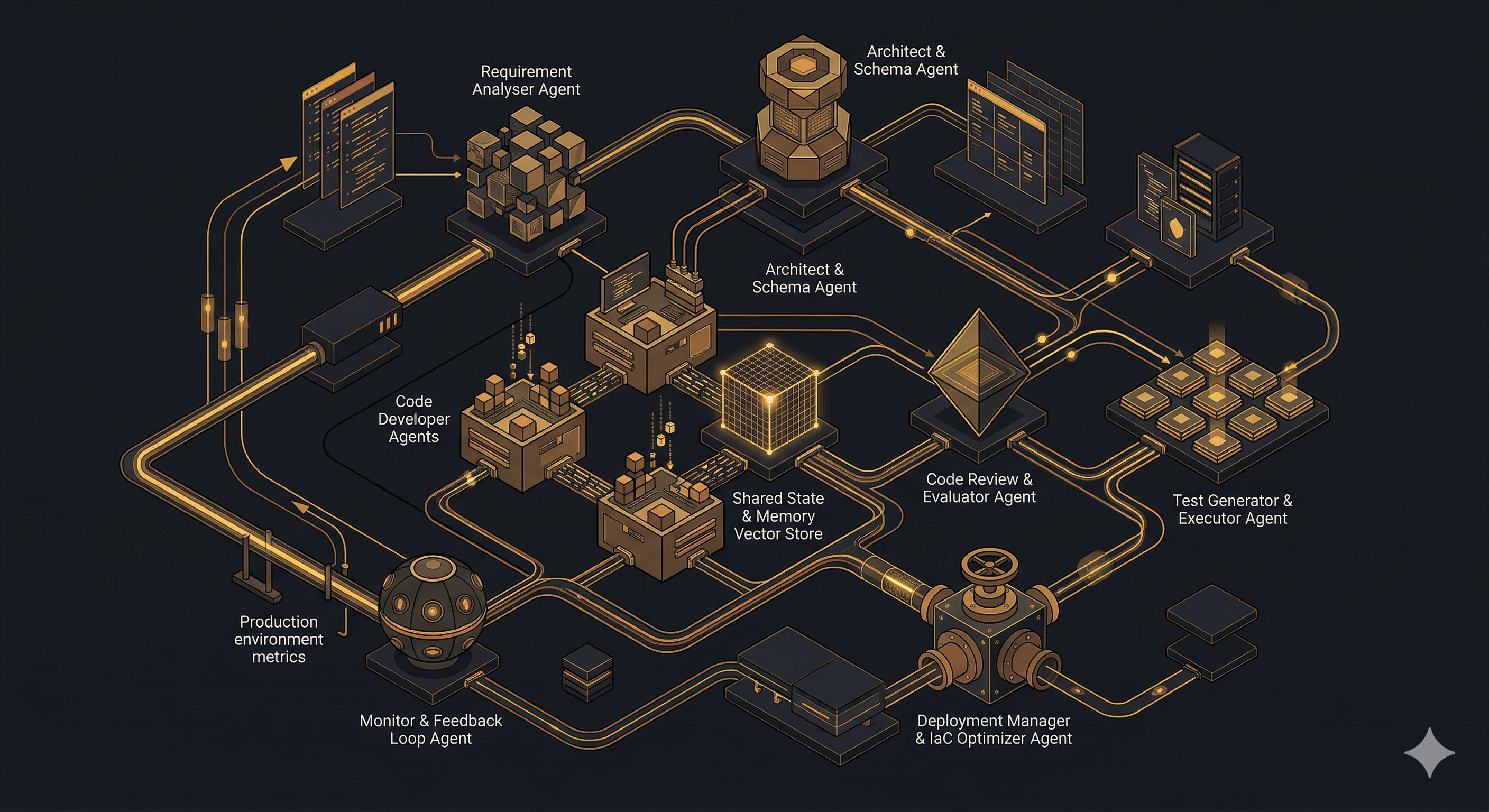
A full walkthrough of the AI agent factory — from inbound ticket to deployed code — with no human in the loop.
I build automated AI development factories — systems where AI agents do the engineering work, not just assist with it. Triage, estimation, development, testing, deployment, monitoring, and feedback collection — all running autonomously, with human oversight where it matters.
My background is hands-on delivery. I've built production systems across cloud infrastructure, product engineering, and AI automation. Right now I'm delivering an agentic AI transformation at OAG Aviation and building Rembr, a persistent memory layer for AI agent teams.
I don't sell advice. I install working systems and leave them running.
Most AI adoption stops at code completion tools. Copilot-level. That captures maybe 3–5% of the waste in a delivery pipeline. The other 95% — triage, estimation, prioritisation, testing, documentation, deployment, feedback — stays manual.
I replace that with a system of specialist AI agents that run the entire lifecycle. Your engineers focus on architecture and hard problems. Everything else is automated.
Specialist agents for development, testing, code review, documentation, and security scanning — working in parallel, around the clock. Every line of generated code is comprehensively tested, validated against your standards, and security hardened before it moves forward.
AI-driven triage, estimation, priority scoring, sprint planning, and accuracy tracking. Over 20 orchestrated workflows replacing manual product management overhead.
Signal in → classify → ticket → develop → test → validate → harden → deploy → announce → measure → learn. End-to-end, with no manual handoffs — and no code ships without passing the full quality and security pipeline.
Automated engagement monitoring, AI-generated release notes and announcements, multi-platform publishing, and conversion tracking — closing the feedback loop.
Real-time intrusion detection with AI investigation, automated remediation, and incident learning. Security events feed back into the development pipeline.
Powered by Rembr — an intelligence layer built for AI agent teams. Shared context spans decisions, incidents, and codebase history. Temporal reasoning ensures agents understand when things changed, not just what changed. Contradiction detection prevents conflicting decisions accumulating across sprints. The result: agents that continuously optimise from accumulated experience, not just from the current task.
"The goal isn't AI-assisted engineering. It's engineering that runs itself — with your team directing, not doing."
This isn't a technology bet that needs a budget line and a prayer. The engagement is priced as a percentage of forecasted engineering savings — typically 8–12% of the capacity you reclaim. Your team keeps 88–92% of the value from day one.
If your 100-person engineering team costs £10m a year and we forecast a 30% efficiency gain, you're looking at £3m in reclaimed capacity. My fee is a fraction of that.
I don't run workshops or produce decks. I install production systems into your existing infrastructure and leave them running autonomously.
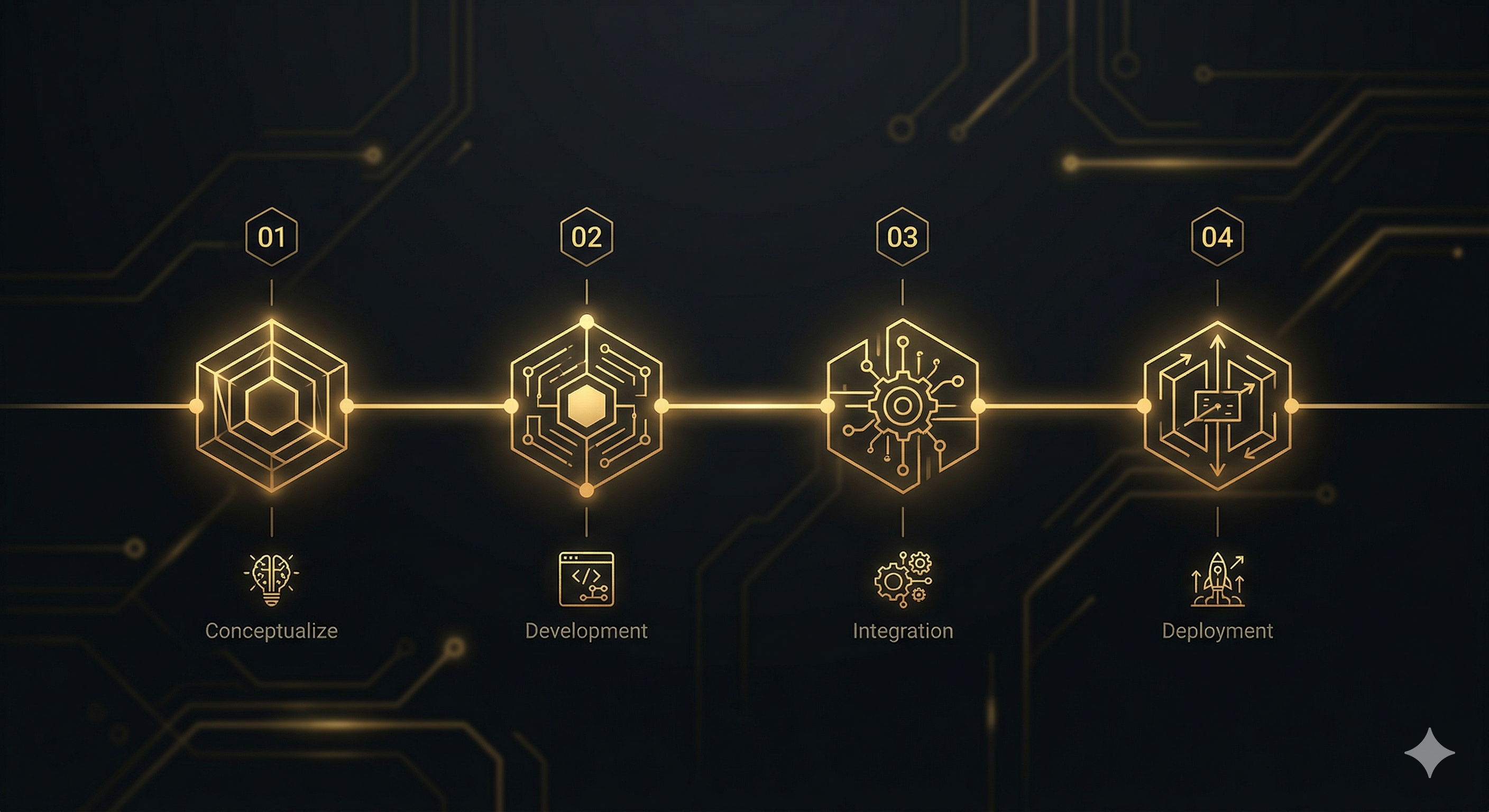
I map your delivery pipeline, team structure, cost base, toolchain, and pain points. This shapes exactly what gets installed and what the savings forecast looks like.
I deploy the agent workforce, configure the automated product ownership layer, wire up the closed-loop pipeline to your existing tools, and activate the memory layer.
Full system goes live. I measure initial velocity improvements against the baseline, tune the agents, and confirm the savings forecast is tracking.
I hand over a system that runs without me. Ongoing AI stewardship — context management, guardrails, workflow optimisation, drift prevention — is included in the annual licence.
Discovery costs you nothing. A 30-minute call is enough to work out whether the factory fits your team and what the savings forecast looks like.
Drawn from production systems I have personally built and run — principally the agentic engineering platform at OAG Aviation and the ProductFoundry platform. Not vendor benchmarks. Not extrapolated projections. Not someone else's case study.
The 50–120× velocity improvement reflects throughput comparisons against pre-automation baselines on the same codebases — lower end for established teams, upper end for greenfield pipelines. The 35%+ engineering cost efficiency improvement reflects capacity reclaimed from manual overhead. Individual team results will vary based on baseline, toolchain complexity, and team structure.
The specifics depend on your discovery session. But here's what the factory typically produces once installed:
Inbound requests are classified, estimated, prioritised, developed, tested, and deployed by AI agents — with human approval gates at the points you choose.
Agents review each other's work, run comprehensive test suites — unit, integration, and end-to-end — and apply automated security hardening before code reaches production. Every deployment is validated. Failed pipelines trigger investigation loops, not fire drills.
Every deployment generates release notes, customer-facing announcements, and changelog entries automatically — published across your channels with no manual intervention.
User feedback, support tickets, engagement signals, and security events are captured, classified, and fed back into the development pipeline automatically.
Every engagement starts with a savings forecast. Tell me your team size, toolchain, and current pain points — I'll tell you what the factory is worth to you, before any commitment.